
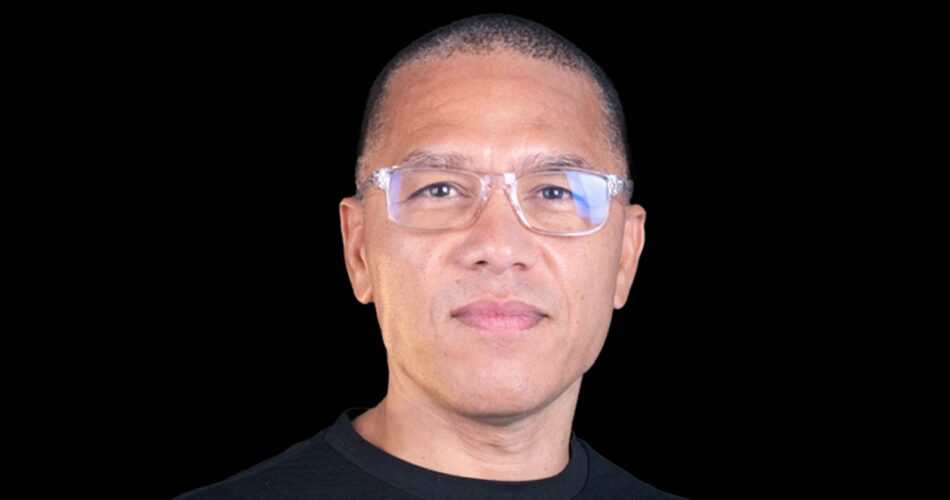
key technology Investor Stafford Massey has issued a sharp public criticism of South Africa's draft national artificial intelligence policy, warning that the document risks “regulating” the conditions required for the country to participate in the global AI economy.
in one Open letter to Communications Minister Solly MalatsiPublished by TechCentral on Thursday, Massey argued that the draft policy is fundamentally wrong – proposing seven new governance bodies before the government can commit a single rand to computing infrastructure or where the electricity will come from to power AI workloads.
“You can't rule what you didn't make,” Macy wrote. “The right sequence, demonstrated by every country that has successfully attracted AI investment, is infrastructure and incentives first, governance second.”
Massey, who has invested in several South African AI start-ups and advises enterprises on AI strategy, said he was writing in his personal capacity.
TechCentral reported that the draft policy gazetted earlier this month proposes to establish a National AI Commission, an AI Ethics Board, an AI Regulatory Authority, an AI Ombuds Office, an AI Insurance Superfund, a National AI Safety Institute, and an integrated AI-powered monitoring centre. Public comment closes on June 10.
Massey argued in the letter to Malatsi that AI policy should be treated as a national security matter rather than a governance exercise, citing South Africa's Gini coefficient of 0.67, youth unemployment above 57% and an extended unemployment rate between 42% and 45%.
mass displacement
He warned that AI-driven automation is already eliminating jobs globally in sectors that employ South Africa's most vulnerable workers – retail, financial services, logistics, basic manufacturing and call centers – and that reskilling programs alone are an inadequate response.
“This uneven, massive displacement of low- and middle-skilled workers in a society already without an AI-powered job creation engine is not an economic adjustment. It is a social explosion,” he wrote.
Reading: South Africa's AI moment is now – and we risk destroying it
One specific argument in the letter relates to electricity. Massey said South Africa's current energy situation – more than 300 consecutive days without load shedding, peak demand of around 26.5GW against available capacity that regularly exceeds 28GW, and around 4GW held in cold reserves – represents a time-limited opportunity that the draft policy fails to grasp.
He pointed to global hyperscaler capital spending on AI infrastructure of more than US$650 billion this year, and said that 30% to 50% of US data centers planned for 2026 face delays or cancellations, primarily due to grid shortages.
“If we act now, South Africa could absorb a meaningful portion of that displaced demand,” Massey wrote, but he added that the regulatory and energy environment currently makes it easier to build a 50MW AI compute facility elsewhere.
Massey was equally critical of the draft's incentive framework, which he described as conceptually sound but operationally empty. The policy references tax breaks, grants, and an “AI Innovation Fund” without specifying R&D tax credit schedules, special economic zone provisions for AI clusters, or compute credit programs.
He said exchange controls regard outside investment as suspect and South Africa's venture capital market remains shallow because the government has not created any tools to de-risk early-stage AI investments.
On talent, Massey estimated that more than 70 skilled South Africans leave the country every day and that 38% of African developers already work for at least one foreign company. He called it a “retention emergency” rather than a future workforce development problem.
Massey proposed replacing the seven institutes proposed in the draft with a national AI office that reports directly to the minister.
Their other recommendations include declaring AI infrastructure a national strategic priority, publishing a data center energy allocation framework within 12 months, drafting an AI investment promotion regulation, launching an emergency talent retention program, making open-source AI a strategic pillar, and committing to quantitative targets.
“South Africa will not regulate its way into an AI economy,” Massey wrote. “It has to work its way into it.” — (c) 2026 NewsCentral Media
Get breaking news from TechCentral on WhatsApp. Sign up here.