
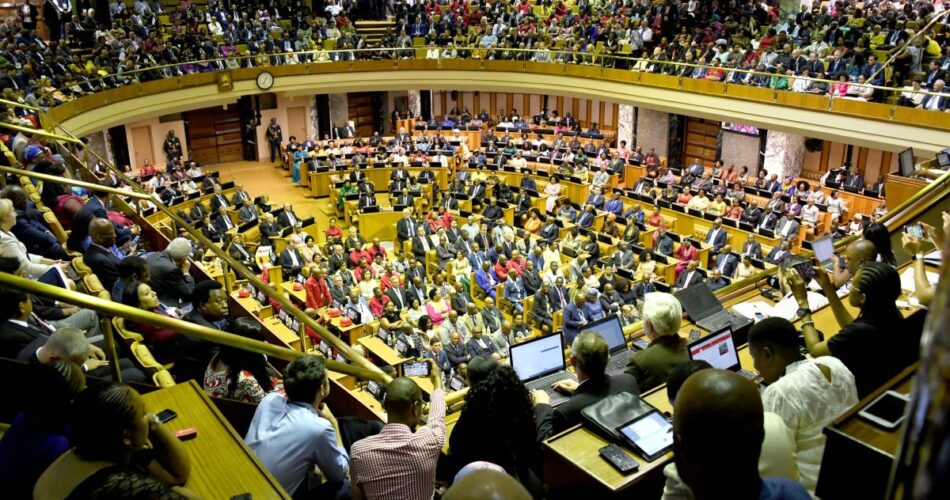
- The Western Cape High Court ruled that the Finance Minister cannot change the value added tax rate because the Constitution gives this power only to Parliament.
- The court gave Parliament 24 months to fix the value added tax law after finding that a section of the act wrongly handed tax powers to the executive.
The Western Cape High Court has ruled that a key part of the Value Added Tax law is unconstitutional because it gives too much power to the Finance Minister.
Judge Matthew Francis handed down the verdict on Thursday.
He said the Constitution makes it clear that only Parliament can decide to impose, change or remove national taxes. That power cannot be handed over to the executive.
What should I follow WhatsApp | Linkedin for latest headlines
The case was brought by the Democratic Alliance in April last year.
The party went to court after Finance Minister Enoch Godongwana announced that value added tax would increase from May 1.
In its court papers, the Democratic Alliance argued that section 7(4) of the Value Added Tax Act allows the Minister to impose, raise or reduce the national tax.
The party said this power belongs only to Parliament and cannot be legally handed over to any minister, even for a short period of time or with safeguards.
Godongwana and South African Revenue Service Commissioner Edward Kieswetter opposed the application.
He argued that the section was meant to support good fiscal management and was not primarily about raising revenue.
Judge Francis rejected that argument.
He said that the power to determine the tax rate is no small matter.
According to the Constitution, the imposition, reduction or abolition of national taxes must be done by the Parliament through an appropriate law making process.
Francis also said there is nothing in the Constitution that allows this power to be transferred to the executive.
However, the court made it clear that unless Parliament changes the law, the already declared tax rate will remain in place.
The law gives Parliament 24 months to fix the problem.
Democratic Alliance Federal Council President Helen Zille welcomed the decision.
He said the decision reaffirmed the principle of “no taxation without representation” and strengthened parliamentary oversight of taxes.
Economic freedom fighters also welcomed the decision.
Spokesman Sinavo Thambo said the decision supports his long-standing position that only Parliament can approve changes to the value-added tax rate.