
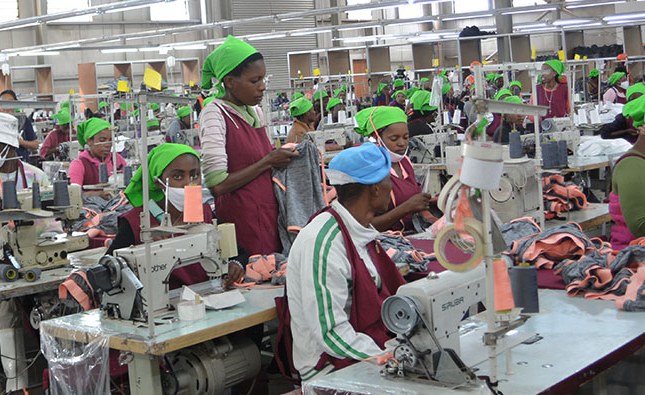
On Labor Day, South Africa will once again celebrate the dignity of labour. Speeches will be given, banners will be waved and the language of “job creation” will be heard on the platforms. But behind the symbolism lies an uncomfortable truth: We are honoring work in an economy where it is out of reach for millions.
By the extended definition, more than 40% of South Africans of working age are unemployed. This figure rises to almost one in two among young people. This is not a minor failure. This is a structural reality. And this gives rise to a more difficult question: What are we really celebrating when the majority cannot participate in the system we support?
This is not just a crisis of unemployment – it is a crisis of how we define work.
Keep up with the latest headlines WhatsApp | Linkedin
For decades, South Africa's economic promise has been based on a simple idea: formal employment is the primary path to dignity, stability and upward mobility. This makes sense in an industrial economy where large companies can absorb large amounts of labor. But that world is fading. Today, even though roughly 16 to 17 million South Africans are employed, millions more – more than 8 million beyond the extended measures – are locked out, with little realistic prospect of absorption into the formal sector on the required scale.
And yet, our policies, corporate strategies and public discourse rest on a shrinking model of work.
“Labor Day, in its current form, risks becoming a commemoration of exclusion.”
Even the idea that economic growth will naturally translate into jobs is becoming difficult to sustain. Large, listed companies across sectors from retail to telecommunications and mining are increasingly announcing layoffs; Not as a temporary response to the crisis, but as part of an ongoing restructuring in an economy that demands more work with fewer people. In other words, the companies we expect to absorb labor are constantly learning to operate with less labor.
We talk about unemployment as if millions of people are unemployed. They are not. In townships and rural areas, a different kind of economy is already alive. This is found in youth creative monetization music and culture without record labels; Building customer base through WhatsApp in informal merchant; To freelance coders sourcing global work from smartphones; And in the countless side hustles that never show up in official statistics but maintain households every day.
This is work. It is not recognized as such.
The informal sector alone supports approximately 3 million South Africans, yet makes only a small contribution to gross domestic product (GDP) and remains marginalized in policy design. Additionally, it is estimated that small businesses employ the majority of the workforce and contribute up to 40% of economic output; Yet South Africa lags behind its peers in promoting new entrepreneurial activity. We rely on this ecosystem but we do not enable it enough.
Workers' Day, in its current form, risks becoming a commemoration of exclusion – honoring those within the formal system while ignoring the ingenuity of those forced to work outside it. If dignity is only linked to formal employment, we are effectively declaring that millions of South Africans live without it. That cannot be the standard.
The challenge, then, is not just to create more jobs. This aims to expand our understanding of what counts as meaningful economic participation.
This requires a change in policy as well as mindset.
wages for ownership
First, we must legitimize and support the informal and digital economy – not treat it as a temporary interruption. This means rethinking how we provide access to finance, infrastructure and markets for those working outside traditional business structures. This means recognizing that a young person running an online clothing brand or independently producing music is not “unemployed” – they are an entrepreneur operating in a system that has not yet been developed.
Second, corporate South Africa must confront its role in perpetuating the boycott. Recruitment practices that demand prior experience for entry-level roles, or networks that privilege the already connected, systematically exclude new entrants. If businesses are serious about transformation, they must go beyond compliance metrics and proactively design pathways to inclusion – whether through procurement, incubation or new forms of partnerships with emerging enterprises.
Third, we need to shift the conversation from wages to ownership. South Africa remains one of the world's most unequal societies, with the Gini coefficient above 0.6 and the top 10% owning the vast majority of wealth. In such a context, pay alone will never reduce the gap. Work that does not create assets will not provide meaningful economic freedom. Employee participation, ownership schemes, community trusts and innovative empowerment structures must move from the margins to the mainstream.
“What will save us is a broader, more inclusive view of work.”
Ultimately, the government must move with urgency and imagination. The policy toolkit of the past – industrial stimulus, public sector employment and regulatory adjustment – will not suffice in itself. South Africa has high levels of mobile connectivity and a growing digital user base, yet lacks a coherent strategy to translate this into large-scale participation in the global digital economy. The question now is not whether this change will happen or not, but whether we will lead it or lag behind.
None of this suggests that formal employment no longer matters. it happens. Jobs remain an important pillar of economic stability and social cohesion. But they can no longer be the sole pillar.
redefining work
Today, more than 18 million South Africans depend on social grants, more than those in formal employment. This is not a moral failure; This is indicative of an economy that is under stress, that has not kept pace with the needs of its people. This underlines the urgency of creating new avenues for participation.
Labor Day should not just be a celebration of those who have jobs. It must be a reckoning with those who don't – and there must also be recognition for those who are redefining work on their own terms.
If we are honest, the most dangerous myth in our economy is that only jobs will save us. They won't do it – not at the scale or pace required. What will save us is a broader, more inclusive vision of work: one that values hustle as much as hierarchy, creation as much as employment, and ownership as much as income.
Until then, Labor Day will remain a celebration for some — and for many others, a reminder of an economy that has yet to find a place for them.
*Usiphile Mpetsheni is a UCT alumnus, and a chartered accountant working as a Senior Manager in Audit, who writes on corporate finance, economic policy, industrial development and transformation policy.