
South Africa has launched a long-term digital connectivity investment roadmap aimed at expanding high-speed broadband access by 2035, with the Development Bank of Southern Africa (DBSA) and government partners pitching the plan as a central step towards reducing the country's digital divide and unlocking broader economic inclusion.
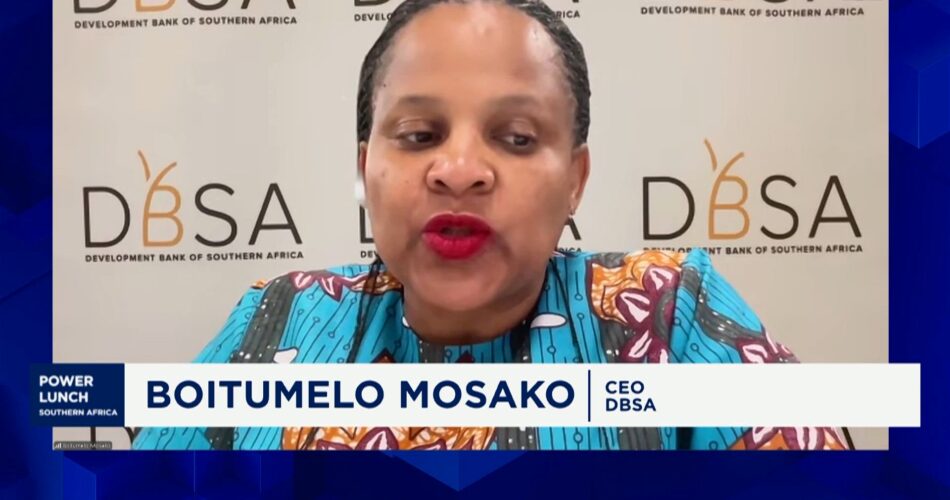
Speaking in a television interview after the launch, DBSA CEO Boitumelo Mosako said the roadmap aims to move beyond broad ambition and provide an evidence-based execution plan for a more meaningfully connected South Africa. The strategy is designed to align the rollout of digital infrastructure with the country's broader policy agenda, including the National Development Plan 2030, SA Connect, broader infrastructure priorities and the UN Sustainable Development Goals, he said.
At its core, the roadmap seeks to answer a challenge that South Africa's digital sector has long faced: how to translate the demand for connectivity into affordable, accessible and economically useful broadband for homes, businesses and disadvantaged communities.
Mosako said the report is based on rigorous analysis and aims to do more than outline aspirations. It determines the amount of investment required, identifies infrastructure and policy constraints, and maps the necessary levers to enable implementation. In his words, this initiative is ultimately about “the implementation of moving to a meaningful digitally connected South Africa”.
An emphasis on “meaningful” reach is a key element of the strategy. Rather than measuring success based solely on whether a signal is present or whether a person has a mobile device, the roadmap frames connectivity as a productivity tool that should improve education, economic participation, and opportunity.
Mosaco illustrated the issue using the example of a family of five. In many low-income households, he said, Internet access often depends on a mobile phone. If the device owner leaves home, the family effectively loses connectivity. This leaves students, job seekers and other household members deprived of online services and opportunities.
Conversely, reliable high-speed broadband at the household or community level can allow youth to access online classes, training, and other educational resources even if they cannot access traditional institutions. For businesses and communities, improved connectivity can help unlock participation in the digital economy, support entrepreneurship and create new avenues of income generation.
The roadmap also takes a close look at where gaps in connectivity remain. According to Mosako, this work helps identify which provinces are ahead, which are lagging behind and where intervention is most needed. This data-driven approach is likely to be important as policymakers and financiers attempt to direct resources to disadvantaged areas without duplicating the private investment already underway in better-connected markets.
The scale of funds required is significant. Based on the scenarios assessed in the roadmap, South Africa will need digital infrastructure investments of between 100 billion Rand and 143 billion Rand by 2035. The country already has what Mosaco describes as a vibrant private sector investing in digital connectivity, but the roadmap seeks to define how public and development finance can work with existing market players to close the remaining gaps.
This includes leveraging existing infrastructure and collaborating with state-owned entities where appropriate, as well as using development finance instruments to make more challenging projects bankable. Mosaco said the DBSA is looking beyond traditional project funding and instead focusing on how it can catalyze markets, de-risk the investment environment and support the partnerships needed to accelerate the rollout.
For the DBSA, this role extends not just to financing, but also to policy and regulatory support. Mosaco said the institution wants to help improve the investment climate and back reforms that make the deployment of digital infrastructure easier and more commercially viable. Project preparation funding is another area where the DBSA believes it can play a practical role, particularly in helping to take promising opportunities from concept to implementation.
The bank's overarching message is that connectivity is no longer a standalone telecom issue. It is increasingly linked to South Africa's competitiveness, labor market prospects and potential for inclusive growth. If fast broadband is successfully rolled out, it can support new industries, increase productivity and create an enabling environment for youth to access jobs and build their own businesses.
However, success will largely depend on implementation and coordination. Asked what South Africa's digital landscape should look like by 2035 if the roadmap is successful, Mosako first pointed to the need for stronger alignment between the different players involved. A coordinated approach between public institutions, financiers, the private sector and other stakeholders will be necessary to avoid fragmented efforts and slow implementation.
He also pointed to a concrete performance ambition: to increase connectivity speeds from about 20 megabytes per second currently to 100 megabytes per second over time. Reaching that limit would significantly improve the quality of digital access available to citizens and could support more advanced online applications in education, commerce and public services.
Ultimately, the roadmap has been prepared as part of a larger national ambition. South Africa not only wants to expand internet access, but also establish itself as a more competitive player in the global digital economy. If the investment plan is successful, the country could see more citizens online, greater economic inclusivity, stronger productivity growth and a digital ecosystem better able to support innovation and job creation.
For now, the launch marks the beginning of what will likely be a long and closely watched implementation phase. With funding needs amounting to tens of billions of rand and infrastructure shortfalls still uneven across the country, the credibility of the roadmap will depend on whether South Africa can translate analysis and alignment into real-world delivery.
Nevertheless, the strategy provides the government and investors with a clearer outline than before: a quantitative pipeline of need, a policy rationale for intervention and a set of targets, all aimed at ensuring that connectivity is not only wider, but more meaningful to the people and businesses expected to rely on it.