
- • Ramaphosa announced tighter immigration enforcement and border controls.
- • The measures have come as anti-immigrant protests and attacks increase across the country.
- • The government says illegal immigration is not the root cause of South Africa's economic challenges.
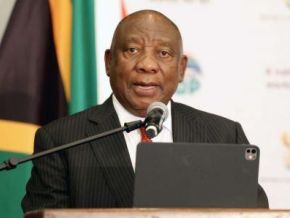
South African President Cyril Ramaphosa unveiled a sweeping plan on June 7 to strengthen immigration enforcement and toughen labor rules, as rising anti-immigrant sentiment has stoked political and social tensions across the country.
In a national address, Ramaphosa outlined a strategy that includes a tough crackdown on undocumented migrants, stronger border security, tighter monitoring of the immigration system and new efforts to tackle corruption. The plan also calls for modernizing identification systems and reviewing laws governing immigration and employment.
The measures are one of the government's most significant efforts in recent years to address concerns over illegal immigration, an issue that has become increasingly prominent amid high unemployment and growing public frustration over economic conditions.
Under the plan, employers hiring undocumented workers will face tougher penalties. The government also intends to set up special immigration courts to speed up case processing, recruit 10,000 labor inspectors, create a national biometric register and gradually phase out South Africa's green bar-coded identity books.
Officials are also considering quotas on foreign workers in selected industries and tighter regulation of small businesses.
“Our objective is clear,” Ramaphosa said. “We want a South Africa where everyone who enters the country does so legally.”
Response to increasing social tension
The announcement comes at a time when anti-immigrant rhetoric and xenophobic incidents are gaining momentum across the country.
In April and May, the civil movement March and March, which advocates stricter enforcement of immigration laws, held demonstrations in major cities including Pretoria, Johannesburg and Durban.
Supporters of the movement argue that undocumented immigrants contribute to economic hardship, pressure on public services, and rising crime rates. Those claims have become increasingly visible in public debate as South Africa grapples with persistent unemployment and slow economic growth.
The worsening climate has prompted many neighboring countries to take emergency measures to aid their citizens living in South Africa.
Nearly 1,000 Ghanaian citizens have been repatriated following the latest wave of xenophobic attacks, according to Ghana's Foreign Ministry. Those returning home will receive medical and psychological support as well as reintegration assistance including compensation and employment opportunities.
Nigeria and Malawi have also launched programs to assist their citizens affected by the unrest.
Economic pressures fuel debate
As Africa's second largest economy, South Africa remains a major destination for migrants from across the continent, including both documented and undocumented workers.
Yet the country is facing deep economic challenges. Growth remains too weak to reduce unemployment, poverty and inequality.
The World Bank expects economic growth to improve in 2026, but not enough to produce a meaningful decline in unemployment. According to the organization, approximately 60% of South Africans live below the upper-middle-income poverty line.
The labor market is under severe pressure. South Africa's unemployment rate remained above 30% throughout 2025, averaging 32.4% and affecting more than eight million people.
Ramaphosa acknowledged that many South Africans are concerned about the impact of illegal immigration on jobs, public services, security and the rule of law.
At the same time, he cautioned against blaming immigrants for the country's broader economic problems.
Ramaphosa acknowledged that South Africa struggles with high and persistent unemployment, especially among young people. He also cautioned against blaming illegal immigration for all the country's economic problems.
He argued that strong economic growth, increased investment and job creation are necessary to address the frustrations that continue to fuel tensions around immigration.
Charlene N'Dimon