
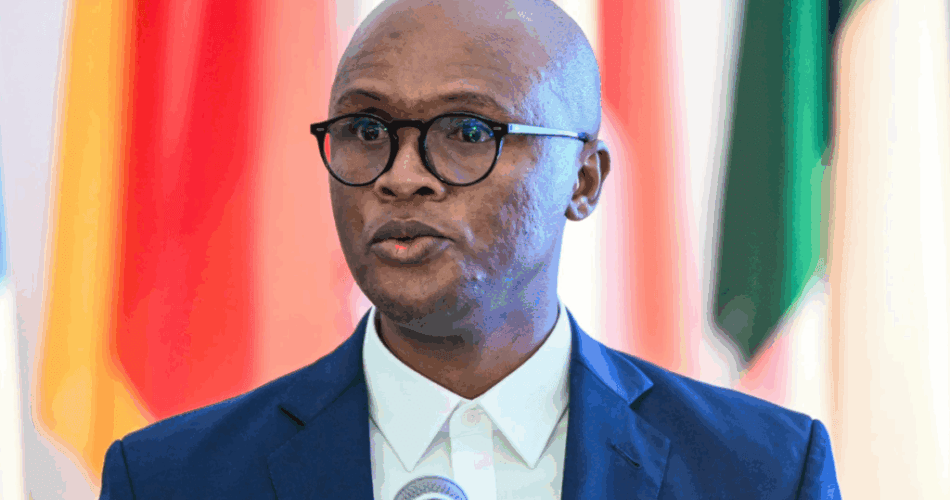
South Africa's Communications and Digital Technology Minister Solly Malatsi has withdrawn the country's draft National Artificial Intelligence Policy after an internal investigation confirmed that the document's reference list included fictitious sources, in what the minister described as an unacceptable failure of integrity.
Malatsi said, “Following the revelation that the draft National Artificial Intelligence Policy published for public comment included various fictitious sources in its reference list, we initiated internal inquiries, which have now confirmed that this was the case.” “This failure is not merely a technical issue but has compromised the integrity and credibility of the draft policy.”
The draft policy was approved by the Cabinet on 25 March and published in the Government Gazette on 10 April, with a public comment period open until 10 June. Its return was established as a landmark document in South Africa's efforts to establish a formal national framework to regulate artificial intelligence.
Malatsi said the most plausible explanation for the error is that the AI-generated citations were included in the document without proper verification – an irony he directly acknowledged. He said, “This unacceptable lapse proves why vigilant human oversight over the use of artificial intelligence is important. It is a lesson we take with humility.”
The Minister said that the Department of Communications and Digital Technologies does not meet the standard expected of an institution leading South Africa's digital policy environment, and confirmed that consequence management for those responsible for drafting and quality assurance will be pursued. “South Africans deserve better,” he said.
This withdrawal is a significant blow to South Africa's AI governance timeline. The draft policy was built around six strategic pillars – including capacity and talent development, responsible governance and human-centred deployment – and proposed a phased three-year implementation plan lasting till the 2027-2028 financial year. It also proposed distributing AI oversight among existing regulatory bodies rather than creating a single AI regulator.
Vice President Paul Mashatile recently described the policy earlier this month as part of a broader government response to the demands of the Fourth Industrial Revolution and said it would set national priorities and sector-specific strategies in manufacturing, energy, infrastructure, transport and trade.
No timeline has been announced for the revised draft.