
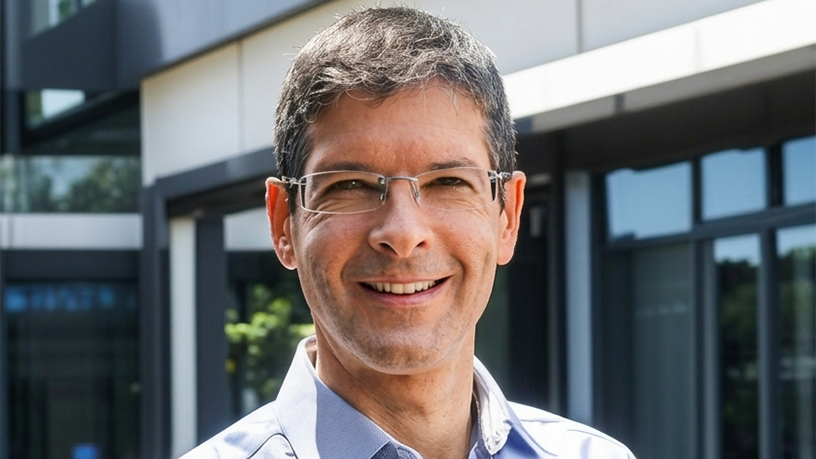
Lionel Moyle, Co-Founder, Growthguru.ai.
Whereas aye While opening the door to new developments within South Africa's formal ICT channels, it is also disrupting business models and increasing complexities due to the rapid pace of change.
Tech industry pundits and professionals claim that this forces channel partners to move faster to take advantage of opportunities while also protecting their revenue base.
According to co-founders Lionel Moyle and Paul Bunting growthguru.aiFor distributors and resellers, AI promises speed to scale, efficiency and intelligence. He claims that this technology can be a great equalizer for SMEs and emerging players. However, the reality is far more complex.
Moyle and Bunting say South Africa's channel landscape is fragmented, with legacy systems, accelerating innovation cycles, complex incentive structures and increasing pressure to deliver more with less resources.
They say many channel partners are struggling with device fragmentation, integration hurdles data Silos and the growing skills gap. In too many cases, and when not used correctly, AI is not streamlining the ecosystem – it is exacerbating the cracks that already exist.
Technological supply chain changes
Mark Walker, director of tech consultancy T4i, says the local technology supply chain is changing from high volume, low margin to high value, low volume.
He further said that this has come as a result of markets moving beyond the initial wave of AI experimentation and now focusing on operational adoption.
This means moving away from old-style, reactive systems and limited predictive analytics, toward agentic AI that not only forecasts demand but independently executes workflows, he explains.
“Traditional delivery models are under pressure as refresh cycles have shrunk from five years to two years, and 'just-in-time' models have been replaced by 'just-in-case' strategic buffering. While the last 12 to 18 months have seen pressure due to data “As demand centers on GPUs and DRAM, the series is now facing very rapid obsolescence cycles, which could result in inventory devaluation as customers demand AI PCs equipped with dedicated neural processing units,” says Walker.
According to Moyle and Bunting, the real opportunity lies in ecosystem alignment, partner enablement and AI integration that drives collaboration – not just automation.
But can the channel get it right? Yes, says Bunting, with the disclaimer that it requires a deliberate shift in how channel players think about their role in the ecosystem.
He added, “The opportunity is not just about automating tasks, but about creating better alignment across the entire business. AI needs to connect strategy, promotion, sales and marketing execution into a more integrated system.”

Paul Bunting, Co-Founder, Growthguru.ai.
“While AI is driving strong growth, AI model complexity and integration into workflows between warehouse management, finance, logistics and the new operational and management skills required means the cost of doing business has increased proportionately. Structurally, local distribution channels are under constant threat of disintermediation as large OEMs and hyperscalers go directly to larger enterprise customers and consolidate partner programs.”
Other factors include increased security requirements as supply chains become more intelligent and autonomous, maintaining regulatory compliance and ensuring human oversight to ensure ethical governance, particularly with respect to procurement and legal compliance, he noted.
AI expert and founder of AIforBusiness.net Johan Steyn says AI is simultaneously the biggest opportunity and the most complex challenge that the South African tech channel has faced in a generation.
“For channel operators, there is a temptation to chase technology – but the organizations that will succeed are those that lead with people first. AI unlocks real growth: better demand forecasting, thinner supply chains, faster partner enablement. But it also exposes every weakness in a business – fragmented systems, skills gaps, unclear strategy and leadership that hasn't yet asked the tough questions.

“The channel operators I see succeeding are not necessarily the ones with the most sophisticated tools; they are the ones who have built the human capacity and organizational agility to absorb change at speed.
“In South Africa, where we have both the urgency of a growing economy and the complexity of the global technology ecosystem, a human-centred approach is not optional – it is the only sustainable way forward.”
Looking ahead, Bunting says AI represents a clear democratization opportunity for smaller channel players.
“Most of the conversation about AI in the channel focuses on large distributors and tier-one partners. But AI, when implemented through the right platform, can be the great equalizer for SME resellers and emerging partners who have historically lacked the resources to compete on intelligence and speed,” he commented.
Growthguru.ai cites research from Transformation Systems stating that globally, 70% to 80% of organizations are investing in AI, but only 10% to 15% are actually seeing measurable ROI.
Bunting says that as AI moves from a technology line item to a growth and revenue investment, the evaluation criteria change and it becomes much easier to demonstrate ROI.
Walker suggests that organizations should expect the local supply chain to focus on high-growth areas, such as GPU compute, AI storage, high-performance networking, and power/cooling solutions.
However, given global supply constraints, long lead times, and export control regulations, they will also have to combine new relationships, financing structures, and inventory strategies to reliably meet AI hardware demand.
Bunting says: “AI isn't just changing what partners sell – it's changing how partners should go to market. Those who can align strategy, incentives and execution in real-time will win. Those who rely on static plans and disconnected marketing will be left behind. And, in the highly competitive IT market – where margin pressure, currency volatility and skills shortages already stress partners – the need for structured, intelligent execution is ever greater. Has not been.”